A Christmas Carol in the City of London
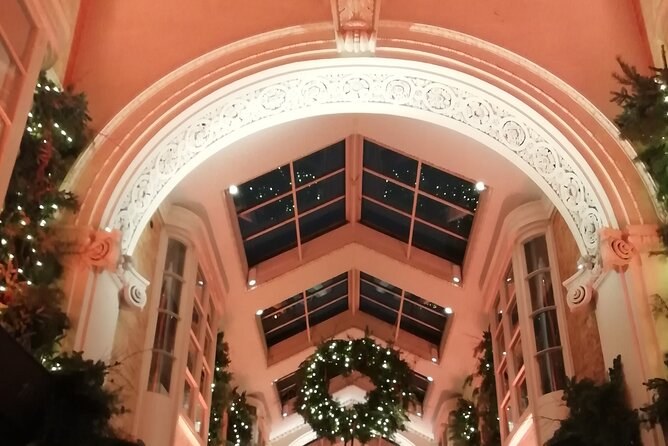
The short answer: A Christmas Carol is set in the City of London, and much of Scrooge's City still stands: the Royal Exchange, the lanes off Cornhill, the old taverns. A small-group walk takes you through them in two to three hours, from Temple station to Leadenhall Market. Go in mid-December and the City is dark by about half past four, as dark as Dickens wrote it.
"It was only just gone three, but it was quite dark already." That is Christmas Eve in the opening pages of A Christmas Carol. In mid-December today the sun sets at 3:52pm, so Dickens was barely exaggerating. The City of the story sits just east of the West End, where most of London's Christmas lights hang, and it is quieter, older and darker. Here is where the story lives, and how to walk it.
The story, in the City
Dickens published A Christmas Carol on 19 December 1843. The first edition sold out by Christmas Eve, thirteen editions followed by the end of 1844, and it has never been out of print. The story is set in the City, London's old financial district, where Scrooge keeps a counting-house.
The book names the places. "Scrooge's name was good upon 'Change" means the Royal Exchange, where merchants met. On Christmas Eve Scrooge's clerk, Bob Cratchit, "went down a slide on Cornhill, at the end of a lane of boys, twenty times", before running home. Cornhill is the street beside the Exchange, and you can walk it today.
The timing was no accident. Dickens wrote the book while the British were looking again at old Christmas traditions, carols among them, and taking up newer customs such as cards and Christmas trees. The tree in the square and the lights over the shopping streets are part of the same story, a century and more on. You can see the old City and the new lights in one evening.
The walk, stop by stop
| Stop | Time there | Why it matters |
|---|---|---|
| Inner Temple | 15 minutes | One of the four Inns of Court |
| Ye Olde Cheshire Cheese | 30 minutes | Rebuilt after the Great Fire of 1666 |
| Royal Exchange | 10 minutes | The 'Change of the story |
| An original City coffee house | 15 minutes | Where the City did business |
| George and Vulture | 5 minutes | In The Pickwick Papers at least 20 times |
| Simpson's, Ball Court | 5 minutes | A chophouse since 1757 |
| The Victorian market hall | 10 minutes | Where the walk ends |
The Christmas Carol walk meets at the bottom of the steps outside Temple station, by the newspaper seller. It takes ten people at most, costs $120.01 per person and runs two to three hours. It ends at Leadenhall Market, and the guide can walk you to the nearest Tube station. It is not wheelchair accessible, but a buggy is fine.
The Temple and Fleet Street
The walk starts in the Inner Temple, one of the four Inns of Court where barristers have trained for centuries. From there it climbs to Fleet Street and Ye Olde Cheshire Cheese at number 145. There has been a pub on the site since 1538; the present one was rebuilt shortly after the Great Fire of 1666. Dickens was among its regulars.
It is dark inside even at midday, with little natural light, and in winter the fires are lit. The walk spends half an hour here, the longest stop of the evening. It is the closest thing on the route to the taverns of the Carol.
🏛️ Did You Know: London's first coffee house opened in 1652 in St Michael's Alley, off Cornhill, run by Pasqua Rosée. The City's coffee houses were where deals were done long before the Exchange was rebuilt, and the walk stops at one of the originals. More on the City's lights is on the lights street by street.
The Exchange and the lanes off Cornhill
The Royal Exchange was founded in the 16th century by the merchant Sir Thomas Gresham and opened by Queen Elizabeth I. The building you see today went up in the 1840s, designed by Sir William Tite, so it was going up while Dickens was writing. In the story's fourth stave, the ghost takes Scrooge "on 'Change, amongst the merchants", to hear them talk about a death.
Behind it, the lanes off Cornhill are where the walk slows down. The George and Vulture sits off Lombard Street. There has been an inn on the site since 1142, it is mentioned at least 20 times in The Pickwick Papers, and Dickens drank there himself. Nearby in Ball Court is Simpson's, a chophouse since 1757 that claims to be London's oldest, and a favourite of Dickens and Thackeray.
⚠️ Important: Simpson's closed in October 2022 and reopens on 1 October 2026 as a restaurant under a new name, Cloth Cornhill. Walks pass the door; the pubs and restaurants keep their own hours, so check before you plan a meal. Other places to eat near the lights are on things to do at Christmas.
The market hall at the end
The walk ends in Leadenhall Market, a market since the 14th century and once a meat, game and poultry market. The Carol's streets are full of poulterers' and grocers' shops at Christmas, and this is where you can picture them. The roof you see, painted green, maroon and cream, was designed in 1881 by Sir Horace Jones.
Leadenhall Market's lights went on on 13 November in 2025, and it is one of the City's best places for them. It is a few minutes' walk from the Royal Exchange; the full map of starts and ends is on the meeting-point map.
Walking it on your own
You can walk the route without a guide. Start at Temple, head up to Fleet Street, then east past St Paul's to Bank, where the Exchange stands. The lanes off Cornhill and the market are a few minutes further on. What a guide adds is the stories, and the courts and passages you would walk past.
- Go late in the afternoon in December, so you reach the market after dark.
- Wear flat shoes: the lanes and the market are cobbled in places.
- Read the first stave first. It is short, and every street feels different after it.
When to go, week by week, is on the best time to see the lights, and getting to the City is on the visitors guide. For the West End's lights after the City, walk west; the London Christmas lights walking tours are compared on one page.
Walks and rides for a story-lover's evening
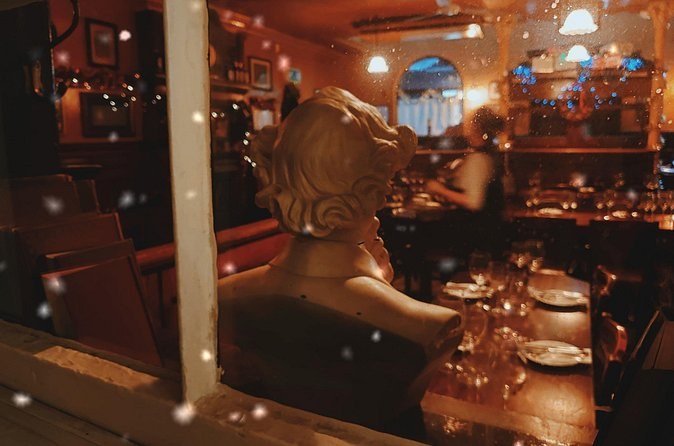
London Christmas Carol & Charles Dickens Small Group Walking Tour
Two to three hours through the Temple and the City's taverns and courts with a guide, ten people at most.
From $120 per person
Check Availability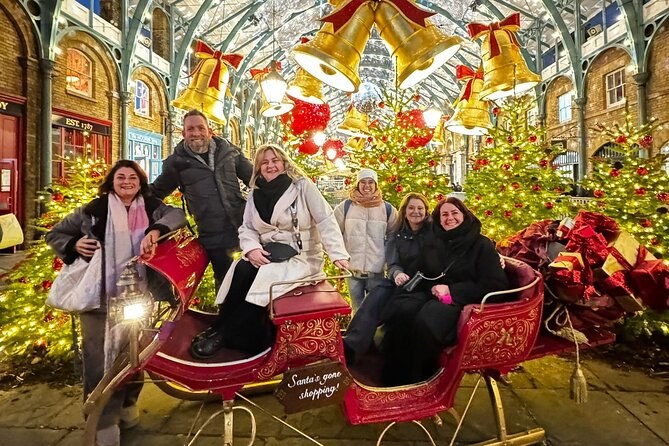
Private London Christmas Lights Walking Tour with a Londoner
A private two-hour walk from Charing Cross with a Londoner, and the history of British Christmas customs on the way.
From $262 per group (up to 8)
Check Availability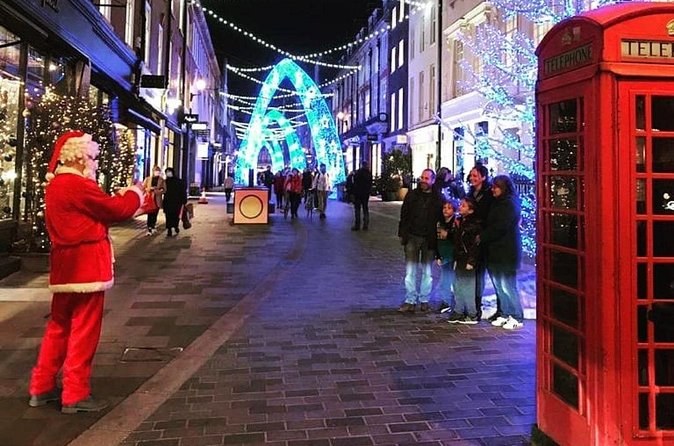
London Private Christmas Lights Taxi Tour with Pick Up
Three or four hours in a private black cab from your address, with Wi-Fi on board and parking paid.
From $471 per group (up to 6)
Check AvailabilityNext: Read the first stave, then book a late-afternoon walk that ends in the market hall after dark. Every fare sits side by side on London Christmas Lights Tours.